Most job sites and outdoor events in Santee need at least one handwashing station per 20 workers, paired with soap and towels under 29 CFR 1910.141(d)(2). Hand sanitizer alone does not satisfy the rule. Crews spraying paint or pesticide need washing facilities too, per OSHA 1926.51(f)(1).
General sanitation on construction sites falls under OSHA 1926.51(c), which sets toilet ratios by crew size: one facility for 20 workers or fewer, then one toilet and one urinal per 40 workers as the crew grows past that, dropping to one per 50 once you hit 200 people. Handwashing follows the same logic in spirit, even though the letter of the rule speaks mostly to toilets. Where crews are applying paints, coatings, herbicides or insecticides, OSHA 1926.51(f)(1) kicks in specifically, requiring washing facilities for that contaminant exposure. That is a narrow rule. It does not cover a framing crew or a landscaping job with no chemical work. For general labor sites in Santee, pair your portable toilet rental with a handwashing station rental and you are covered either way. Farms with hand-labor crews fall under a different standard, OSHA 1928.110, which asks for potable water, toilets and handwashing within a quarter mile walk of the work. If you run a produce operation near Winter Gardens, 6.6 miles east of Santee, that standard applies to you, not the construction table. Check our farm and agricultural restrooms page for specifics on that setup.
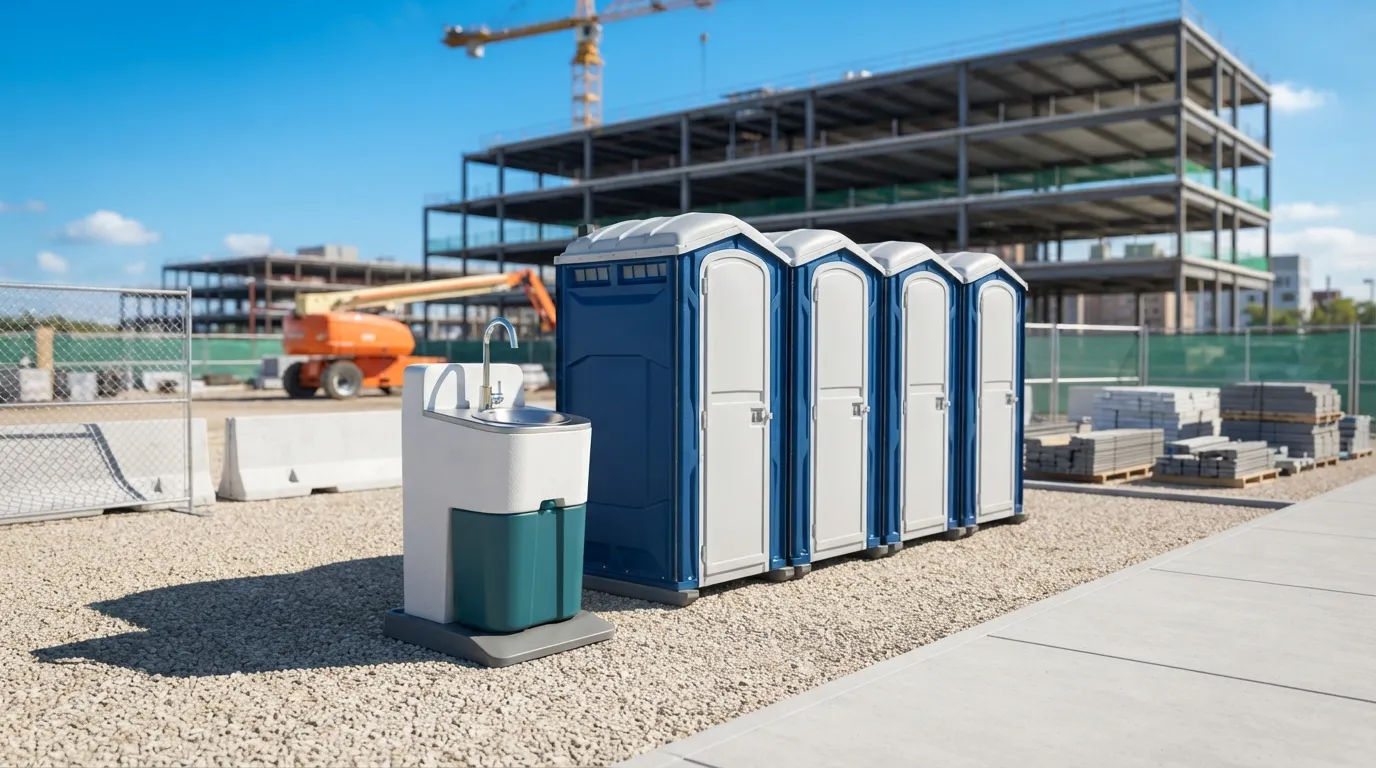
One station per 20 workers is the baseline most contractors use, matching the toilet ratio in OSHA 1926.51(c). A crew of 15 needs one station. A crew of 45 needs two, maybe three if the site is spread out and people are not walking far to reach one. Distance matters as much as count. If your porta johns sit at one end of a Santee lot and the handwash station sits at the other, workers skip it. Put them side by side. Our porta potty placement guide covers spacing in more detail, and our how many porta potties do I need page walks through the math for mixed crew sizes. Events run differently. A wedding with 80 guests does not need OSHA math, but caterers handling food do need a working sink nearby, not just sanitizer. For food service or catering tents, look at a portable sink rental instead of a sanitizer stand alone, since 29 CFR 1910.141(d)(2) specifically calls for soap and towels or a hand drying device, not gel alone.
No. Hand sanitizer stations do not satisfy 29 CFR 1910.141(d)(2), which requires soap and running or standing water with towels or a hand drying device. Sanitizer is a fine supplement on a job site or at a festival gate, and a hand sanitizer station rental is cheap insurance for foot traffic. But if an inspector walks a Santee construction site and finds sanitizer bottles instead of a proper wash station, that is a citation waiting to happen. The fix is simple: rent both. A sanitizer stand at the entrance for casual visitors, and a real handwashing station with soap and water near the standard porta potty rental units for the crew that is actually working the site all day. This split setup is common at festivals in Santee and at sites near Bostonia, 4.8 miles southeast, where mixed crowds of workers and the public share the same footprint.
Place handwashing stations next to the toilets, not across the lot. Workers will not walk fifty feet out of their way, so proximity drives actual use more than the unit count does. ADA Standards section 403.5.1 sets a 36 inch minimum clear width for the accessible route leading to any unit, and section 304.3.1 calls for a 60 inch turning circle at accessible stations, so leave room around the pad, not just a straight path in. A gravel or dirt lot in Eucalyptus Hills, 5.4 miles northeast of Santee, still needs a stable, firm, slip resistant surface under the unit per ADA Standards section 302.1, even on a temporary job site. Ground that shifts under a wheelchair or a hand truck is a problem later, not just an inspection flag now. If your site also needs an ADA accessible porta potty, pair placement decisions for both units at once since they usually sit together. Our porta potty rental checklist has a placement section worth reviewing before delivery day. For long-duration sites, a monthly porta potty rental with an attached wash station cuts down on repeated setup costs.
Yes. OSHA 1926.51(c) does not set a minimum crew size exemption. Even a five person crew needs access to a toilet and washing facility. Renting one portable toilet rental unit with a paired handwash stand covers a crew that size on most Santee residential jobs.
Yes, if the units sit close together and the station handles the expected traffic. One station comfortably serves a cluster of units for crews under 20. Larger clusters, like those on a construction site services job, need stations spaced so nobody walks far.
No, not for food handlers or crews doing physical work. Guests at a private party can rely on sanitizer stands for casual use, but see our event restroom rental page for what a mixed-use weekend event actually needs on top of that.
No. Most rental units are self-contained with a built-in fresh water tank and a foot pump or gravity-fed spigot, no hookup needed. That is why they work on raw land or lots near Lemon Grove, 11.0 miles south, with no utilities run yet.
A handwashing station is built for quick hand washing near toilets. A portable sink rental usually has a larger basin and is meant for food prep or dishwashing, which is what catering crews and food trucks actually need on site.
Call now or request a free quote — clean units, on-time delivery, transparent pricing.